From Daily Grind to Ghost Town: The Quiet Collapse Happening to Your Favorite Streamers
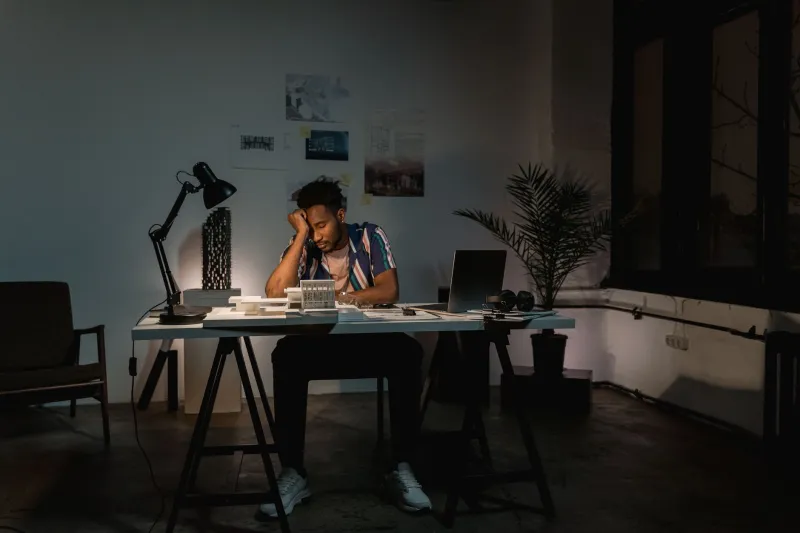
You noticed it a few weeks ago. The uploads went from daily to every other day. Then once a week. Then a cryptic Instagram story about "needing space" and a Twitch stream that got canceled three times in a row. Now there's silence, punctuated by the occasional retweet of something totally unrelated to content. Your favorite creator hasn't disappeared — not yet — but they're clearly running on fumes.
This is burnout. And it's not dramatic or sudden. It creeps in like a slow leak, and by the time most creators realize what's happening, they're already underwater.
The Machine That Ate Them Alive
Let's be real about what platforms actually demand. To stay relevant on YouTube, the algorithm quietly punishes anyone who doesn't post at least twice a week. Twitch rewards streamers who go live for six, eight, ten hours a day. TikTok's discovery engine essentially requires a daily content tax just to maintain visibility. When you add up the filming, editing, thumbnail designing, community management, brand deal negotiations, and social media upkeep, you're looking at a workload that would break most full-time office workers — except this one never clocks out.
Creators who built audiences by being "always on" essentially signed an unwritten contract with their followers: I will always be here. The problem is nobody told them the contract had no exit clause.
Industry consultant Dana Mercer, who works with mid-tier YouTube creators on sustainable content strategies, puts it bluntly: "The creators who hit the wall hardest are the ones who scaled up too fast. They went from posting twice a month to daily uploads because the numbers responded, and they chased that growth without ever building the infrastructure — or the mental health toolkit — to support it long term."
Two Very Different Kinds of Slowdown
Not every creator who posts less is in crisis. There's a massive difference between a strategic pullback and a collapse in slow motion, and fans who can read the signals will have a much better sense of what they're actually watching.
A strategic slowdown looks deliberate. The creator announces it, frames it as a quality-over-quantity shift, maybe even explains what they're working on instead. Their social media stays active. They engage with comments. The content they do post feels considered and energized. Think of it like a band going on a brief hiatus to write a better album — the silence has intention behind it.
A burnout collapse looks different. Posts become erratic without explanation. The content that does go up feels rushed, joyless, or weirdly detached from the creator's usual personality. Streams get canceled last minute with thin excuses. The creator's online presence becomes inconsistent — sometimes over-sharing anxious thoughts, sometimes going completely dark. There's no roadmap being communicated because, honestly, they don't have one.
One gaming creator who asked to remain anonymous described it this way: "I hit a point where I was sitting down to record and just... nothing. I'd stare at the camera for twenty minutes, post something I hated, and then spiral about how bad it was for the rest of the day. I wasn't creating anymore. I was just surviving the upload schedule."
The Numbers That Make It Worse
Here's the brutal irony: the moment a creator starts slowing down, their analytics start punishing them. Watch time drops. The algorithm stops recommending their videos. New subscriber growth stalls. Ad revenue shrinks. And for creators whose entire livelihood depends on those numbers, the financial pressure to push through burnout can actually accelerate the collapse.
It becomes a trap. Post less, earn less, stress more, create worse content, lose more audience, earn even less. Some creators respond by doubling down — grinding harder to recover the numbers — which just speeds up the breakdown. Others simply disappear, sometimes permanently.
Mercer says the financial structure of content creation is uniquely brutal in this regard. "There's no sick leave. There's no PTO. If you stop, the income stops, and for a lot of these creators, especially the ones who left traditional jobs to do this full time, that's terrifying. So they keep going way past the point where any reasonable employer would've told them to take a week off."
What Fans Are Actually Watching For
If you care about a creator's wellbeing — and let's be honest, a lot of us genuinely do — there are patterns worth paying attention to.
The apology spiral. When a creator starts every piece of content with an apology for not posting more, that's a flag. Healthy creators don't feel the need to constantly justify their existence. Burned-out ones are often in a loop of guilt they can't break out of.
The vibe shift. You've watched this person enough to know their baseline energy. When streams start feeling flat, when the enthusiasm that made you subscribe in the first place has been replaced by something mechanical and hollow, trust your gut. Something's off.
The chaotic schedule. Cancellations, schedule changes, and inconsistent posting aren't always signs of burnout — life happens. But when it becomes a pattern with no explanation, it usually means the creator is struggling to function at a basic level.
The over-sharing then silence cycle. Some creators burn out publicly, posting vulnerable content about their mental health struggles, then disappearing entirely when the vulnerability becomes too much. That cycle — raw honesty followed by complete withdrawal — is one of the clearest distress signals in the space.
What Actually Sustainable Looks Like
The creators who seem to last longest are the ones who figured out early that the content machine has to serve them, not the other way around. That means posting schedules that reflect real capacity, not algorithmic ideals. It means building a team — even a small one — to handle the parts of the job that drain them most. It means diversifying income so that a bad month on YouTube doesn't feel like a financial emergency.
It also means being honest with audiences about what they can realistically expect. Fans are far more forgiving than most creators assume. The communities that stay loyal through a creator's rough patch are almost always the ones who were communicated with — not the ones who were left to guess.
"The creators I've seen bounce back from burnout successfully are the ones who treated their audience like adults," Mercer says. "They said, 'Here's what's happening, here's what I'm going to do differently, here's what you can expect from me going forward.' That kind of honesty builds more goodwill than a hundred uploads."
The Bottom Line
Streaming culture has a burnout problem, and it's not going away because platforms stop demanding more. It goes away when creators — and the fans who love them — start treating content creation like what it actually is: a job that requires rest, boundaries, and a sustainable pace.
When your favorite streamer goes from daily to maybe monthly, the easy reaction is frustration. The more useful one is curiosity. Are they making a smart pivot, or are they quietly falling apart? The signals are usually there if you know what you're looking for. And sometimes, the most supportive thing you can do is stick around — and stop refreshing the page expecting something that isn't coming yet.