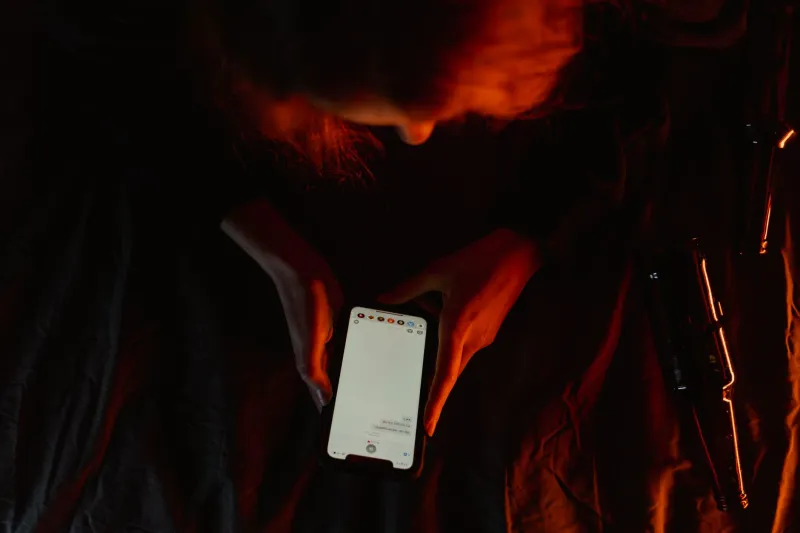
Ghost Mode: The Emotional Wreckage When Your Favorite Streamer Goes Dark

Photo by Photo by lhon karwan on Unsplash on Unsplash
Picture this: you wake up on a Tuesday, crack open your laptop, and notice the little offline indicator next to a name you've watched almost every day for two years. No stream. No tweet. No Discord message. Just... silence. You wait a day. Then a week. Then a month. Eventually, a cryptic post surfaces: "Taking some time for myself. Not sure when I'll be back."
And somehow, that hits harder than when Netflix axed that show you loved after two seasons.
That reaction isn't irrational. It isn't embarrassing. It's actually a pretty well-documented psychological response — and the streaming world is only just beginning to grapple with what it means for both creators and the communities they build.
It's Not Just a Show. It Was a Relationship.
When a scripted series gets cancelled, there's a clear villain. The network pulled funding. The showrunner moved on. The ratings tanked. There's institutional distance between you and the loss — a corporation made a business decision, and you're collateral damage.
But when a streamer goes dark, none of that scaffolding exists. You weren't watching a character. You were watching a person — someone who knew your username, laughed at your jokes in chat, maybe even shouted you out during a subscriber milestone. The parasocial relationship that formed wasn't one-sided in the way traditional celebrity fandom is. It had the texture of actual community.
Dr. Maya Solis, a media psychology researcher who studies digital parasocial dynamics, puts it bluntly: "With a TV cancellation, the grief is about narrative closure — you don't get to find out what happens next. With a streamer hiatus, the grief is relational. You feel like someone you care about has withdrawn from your life, and you don't fully understand why."
That distinction matters enormously. One is about story. The other is about connection.
The Creator's Side of the Equation
Here's what doesn't get talked about enough: the guilt streamers carry when they decide to step back is often crushing.
Jordan, a variety streamer who built a community of roughly 40,000 followers before taking a six-month hiatus last year, described the experience as "a spiral I didn't see coming." He'd been streaming five to six days a week for three years straight, treating it like a job — because, for him, it was. When burnout finally hit, the decision to stop wasn't just personal. It felt like abandonment.
"I'd read every message from people saying my stream was the highlight of their day, that they were going through hard times and my content helped," Jordan said. "So when I needed to disappear for my own mental health, I felt like I was letting down people who depended on me. That's a brutal position to be in."
He posted a short goodbye video, then went quiet. The response was a flood of support — but also a handful of messages from fans who were genuinely distressed. Some felt personally rejected. A few accused him of "abandoning the community" entirely.
This is the impossible math of streamer burnout: the closer the relationship feels to fans, the heavier the weight on the creator when they need to protect themselves.
Why Fans Process It Differently
The grief cycle around a streamer hiatus doesn't follow the neat stages we associate with other kinds of loss. It's messier, more ambiguous. The person is still out there — you might see them post a casual Instagram Story while their channel sits dormant. That ambiguity makes closure nearly impossible.
Dr. Solis calls this "parasocial limbo." Unlike a show cancellation — which is permanent and defined — a streamer hiatus exists in a gray zone where hope keeps the wound open. "Fans oscillate between 'they'll be back soon' and 'they're gone forever,' sometimes in the same afternoon," she explains. "That uncertainty is genuinely stressful in a way that clean endings, even disappointing ones, aren't."
Online fan communities often fracture during these periods. Some members hold vigils — keeping the Discord active, rewatching old VODs, posting daily check-ins. Others drift to new streamers, then feel guilty about it, like they're cheating on someone. A few spiral into obsessive speculation about what went wrong.
The communities that survive a long hiatus intact tend to be the ones that had developed real social infrastructure beyond the streamer themselves — inside jokes, shared lore, members who genuinely knew each other. When the creator is the only glue, the community dissolves fast.
The Quiet Return — And Why It's Awkward
Coming back from a long hiatus carries its own emotional complexity. Streamers who've done it describe the experience as weirdly nerve-wracking — more than launching their channel originally.
Alex, who streams gaming and lifestyle content and stepped away for four months following a family health crisis, said the return stream felt "like the first day at a new school, except everyone already knows you and has opinions about whether you should have left in the first place."
Some fans welcomed her back warmly. Others were visibly cooler. A few never returned. "You realize pretty fast that some people were watching you and some people were watching the show of you," Alex reflected. "The ones who were watching you come back. The others moved on, and honestly, that's okay."
Platforms, notably, offer almost no infrastructure to support either side of this dynamic. There's no graceful way to communicate a hiatus, no tool for creators to set expectations, no resource for fans processing an unexpected absence. It's all improvised, all human, and frequently all a mess.
What This Tells Us About Streaming Culture
The emotional weight of a streamer going dark isn't a quirk or an overreaction. It's a feature of what streaming culture actually is — a fundamentally more intimate entertainment relationship than anything that came before it.
TV gave us characters. Streaming gives us people. That's a genuinely different contract, with different emotional stakes on both sides.
As the industry matures, there's a real conversation to be had about creator wellness, community resilience, and what platforms owe both streamers and their audiences when things go sideways. Right now, that conversation is happening mostly in Discord servers and Reddit threads — quietly, messily, and without much institutional support.
In the meantime, if your favorite creator goes dark and you find yourself weirdly gutted about it: you're not weird. You're just human. And so are they.