Two Screens, One Show: Why Your Phone Became Part of the Broadcast
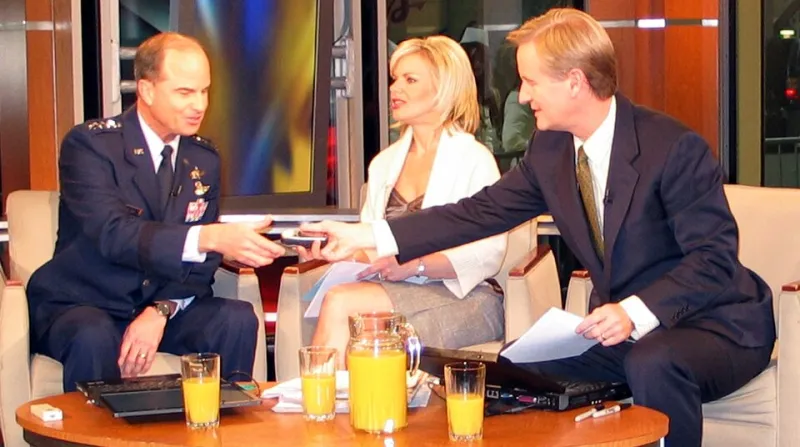
Photo: Captain Johnny Rea (United States Air Force- Space Command Public Affairs), Public domain, via Wikimedia Commons
Try to remember the last time you watched something without touching your phone. Not checking it — watching with it. Because that's the difference now. The phone isn't stealing your attention from the show. Increasingly, it's part of the show.
You've seen the shape of it. A live finale with a voting counter ticking in the corner. A reunion special where the cast reads fan messages from a companion feed. A documentary that drops an extra scene at midnight that you can only see on your phone. The second screen used to be where you went when you got bored. In 2026, it's where the show goes when it wants to keep you.
The Rest of the World Already Knew
American television spent a decade treating the phone as a rival. Other markets treated it as a distribution channel.
In South Korea, live variety formats have been built around real-time audience input for years — vote counts, text messages scrolling across the set, cast members reacting to viewer comments mid-broadcast. Japanese variety and quiz shows have long used app-based play-along mechanics that let the home audience compete against the studio. In parts of Latin America and Southeast Asia, social platforms aren't the marketing arm of a show; they're the second stage.
What changed in the U.S. isn't the technology. It's the willingness to design for it. Streaming platforms now ship companion experiences as a matter of routine: watch-along feeds, live chat layers, cast-tracked commentary, and short-form bonus material that lives exclusively where your thumb already is.
Designing for Split Attention
Here's the interesting part. For years, attention research framed divided viewing as a loss — you're not really watching, you're half-watching. Creators heard that and responded by building shows that assume you're half-watching too.
That means denser recaps. Louder visual signposting. Repeated context cues so you can look up from your phone and know exactly where you are. Some unscripted formats now run a continuous on-screen ticker of what happened sixty seconds ago, which would have seemed insane in 2015 and feels helpful now.
And then there's the opposite move: content built for the phone that assumes the TV is the background. Bonus scenes, extra interviews, alternate endings — short, vertical, and deliberately designed to be watched in a hand while the main show keeps rolling on the big screen. It's not additive in the way bonus features used to be. It's parallel.
The result is a two-track viewing experience, and the most successful shows in 2026 treat both tracks as canon.
The Focus Debate
Is any of this good for us? Depends who you ask, and the answer is genuinely split.
The case against is easy to make. Divided attention is shallower attention. A show designed to survive interruption will never demand the kind of sustained focus that makes great drama land. There's a reason people still rewatch The Wire with their phone in another room.
The case for is messier but real. Watching has always been social, and the second screen restored something that the living room lost — the running commentary, the group chat, the shared gasp. For viewers who'd otherwise be watching alone, the companion feed isn't a distraction from the show. It's the reason the show feels like an event.
And there's a practical argument that doesn't get enough airtime: for a lot of people, the phone is where the accessibility features live. Subtitles, translations, audio descriptions, community explanations for cultural references that don't travel. A global audience watching a Korean or Brazilian or Nigerian format doesn't need a second screen for distraction. It needs one for translation.
What Comes Next
The next phase is already visible. Platforms are testing synced viewing where the phone knows precisely what's on the TV and responds in time — reactions that fire on the beat, trivia that surfaces during a lull, alternate angles during a big scene. It's a technical problem, mostly, and a storytelling problem, definitely.
The shows that pull this off won't be the ones cramming the most extras into your hand. They'll be the ones that understand the rhythm of a room where one person is watching and two screens are glowing. Get that rhythm right and the phone stops being the enemy of the broadcast.
Get it wrong and you've built a show nobody's actually looking at.
Either way, the era of the single screen is over. The remote is no longer the most important device in the room. It's the thing you're holding.