Slow Your Roll: Why the Most Boring Streamers Are Quietly Winning the Internet

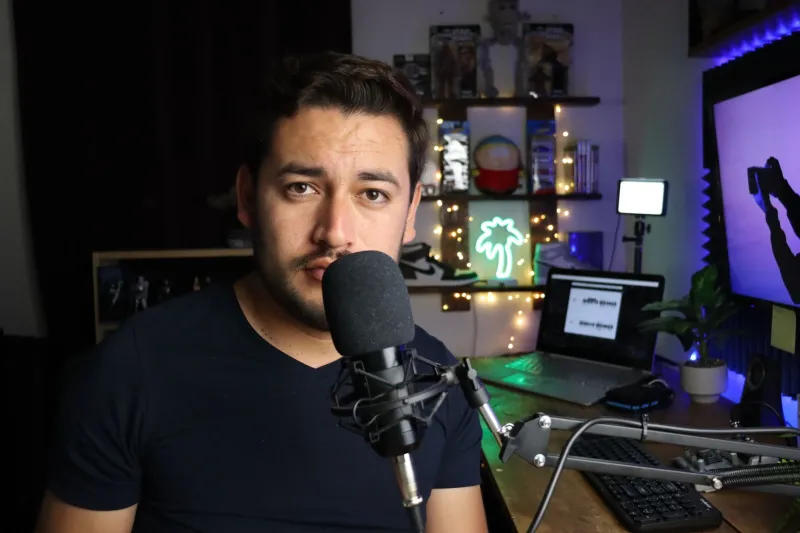
There's a streamer you probably haven't heard of. They don't have a signature catchphrase. They've never rage-quit on camera. Their face hasn't been slapped across a meme that broke Twitter for 48 hours. And yet, they show up every Tuesday and Thursday at 7 p.m. Eastern, their chat fills up with the same familiar usernames, and their subscriber count keeps climbing — slowly, steadily, almost boringly.
That's kind of the point.
While the content world keeps rewarding chaos — the louder, the more dramatic, the more algorithmically explosive the better — a quieter countermovement is gaining real traction. Creators who've ditched the hype machine in favor of something almost radical in its simplicity: just being reliably, authentically themselves. Not a character. Not a brand persona cranked to eleven. Just a person, doing a thing, consistently.
And audiences? They're eating it up.
The Myth of the Magnetic Personality
For years, the dominant wisdom in streaming was basically: you need to be a personality. Big energy, big reactions, big moments. The assumption was that viewers came for the spectacle, and if you couldn't deliver spectacle, you couldn't compete.
That logic made sense when streaming was newer and novelty was currency. But something has shifted. Audiences have been burned by creators who peaked on chaos and then flamed out spectacularly. They've watched their favorite hypemen crash into burnout, controversy, or just the slow death of diminishing returns. After years of content that essentially screamed at them, a lot of viewers are quietly craving something different.
Think about it from a pure consumption standpoint. If you've ever found yourself putting on a low-key cooking stream while you fold laundry, or keeping a calm gaming channel running in the background while you work from home, you already understand the appeal. There's a version of streaming that functions less like a live event and more like hanging out — and that version doesn't require anyone to be the life of the party.
Consistency as a Superpower
Here's where the so-called "boring" creators actually have a massive structural advantage: they can keep going.
Creators who build their entire identity around high-energy, high-stakes content are essentially athletes performing at maximum output every single session. That's not sustainable. Burnout isn't a possibility — it's a scheduled stop on the itinerary. And when those creators take breaks, lose steam, or have an off night that reads as underwhelming to their hype-conditioned audience, the fallout can be brutal.
The low-key streamer, by contrast, has set expectations they can actually meet. Showing up at the same time, doing roughly the same thing, with the same genuine vibe — that's not a limitation. That's a promise they can keep. And in a streaming landscape littered with broken promises, that reliability is genuinely rare.
Regular viewers start to feel like they know what they're walking into. There's comfort in that. The chat develops its own culture, its own inside jokes, its own sense of community that doesn't depend on something wild happening every stream to justify the gathering. The stream itself becomes the point, not just the vehicle for a moment that might go viral.
Strategic Restraint Is an Actual Skill
Let's be clear about something: being a "quiet" streamer doesn't mean being passive or checked out. The creators thriving in this space have just figured out a different set of skills — ones that don't show up in highlight reels but absolutely show up in retention numbers.
Knowing when not to escalate is one of them. When a conversation in chat gets heated, when a game moment could be milked for drama, when the audience is clearly angling for a reaction — resisting that bait and steering things back to a calmer register takes genuine awareness and discipline. It's a form of emotional intelligence that reads as boring to the casual observer but communicates something important to regular viewers: this creator isn't going to get weird on me.
There's also the skill of authentic restraint in content choices. The temptation to chase trending topics, jump on whatever's blowing up this week, or manufacture a controversy for attention is constant. Creators who resist that — who stay in their lane even when the lane feels unglamorous — are making a strategic bet that their core audience is more valuable than a one-time traffic spike. More often than not, they're right.
What Audiences Actually Want (vs. What They Click On)
This is where it gets genuinely interesting from a viewer psychology standpoint. Clicks and loyalty are not the same metric, and the streaming economy is slowly starting to reckon with that distinction.
Sure, a screaming thumbnail gets the click. A drama-filled clip goes viral. But those metrics don't tell you whether someone sticks around, whether they subscribe, whether they show up next week, whether they become the kind of invested community member who actually sustains a creator's career long-term.
Loyalty — the real, durable kind — tends to be built through something closer to trust than entertainment value. Viewers who feel like they genuinely know a creator, who feel seen and welcomed rather than performed at, are the ones who stay. They're the ones who buy the merch without being begged, who defend the creator in comment sections, who bring their friends into the community organically.
The "boring" streamer isn't failing to attract that loyalty. They're just building it through a slower, less flashy process that doesn't generate the kind of content that gets written about or screenshotted and shared. The growth is real; it's just not loud.
The Long Game Nobody's Filming
Here's the uncomfortable truth for anyone chasing virality as a primary strategy: most viral moments don't convert into lasting audiences. They generate a wave of new eyes, many of whom came for the spectacle and will leave when the next spectacle somewhere else demands their attention. The creator is left scrambling to replicate the moment or watch their numbers drift back down.
The consistent, unremarkable streamer doesn't have that problem, because they were never dependent on the spike in the first place. Their audience grew slowly enough that it grew correctly — people who actually wanted to be there, not tourists passing through.
Over a two-year horizon, the math often favors the boring creator. Not always, not in every niche. But more often than the conventional wisdom about streaming success would suggest.
Maybe Boring Was Never the Problem
The streaming world is noisy. It's always been noisy. And for a long time, the only way to be heard in the noise was to be louder than everyone else. But noise fatigue is real, and audiences are increasingly self-selecting toward spaces that feel calmer, more genuine, more human.
If you've been sleeping on the quiet creators in your feed — the ones who don't make your pulse spike but somehow always seem worth tuning into — maybe it's time to look a little closer at what they're actually doing. Because behind that apparently unremarkable surface is usually someone who's figured out something the chaos merchants are still missing: that the most powerful thing you can offer an audience isn't excitement.
It's somewhere they actually want to come back to.